What is a Pump Head Calculator?
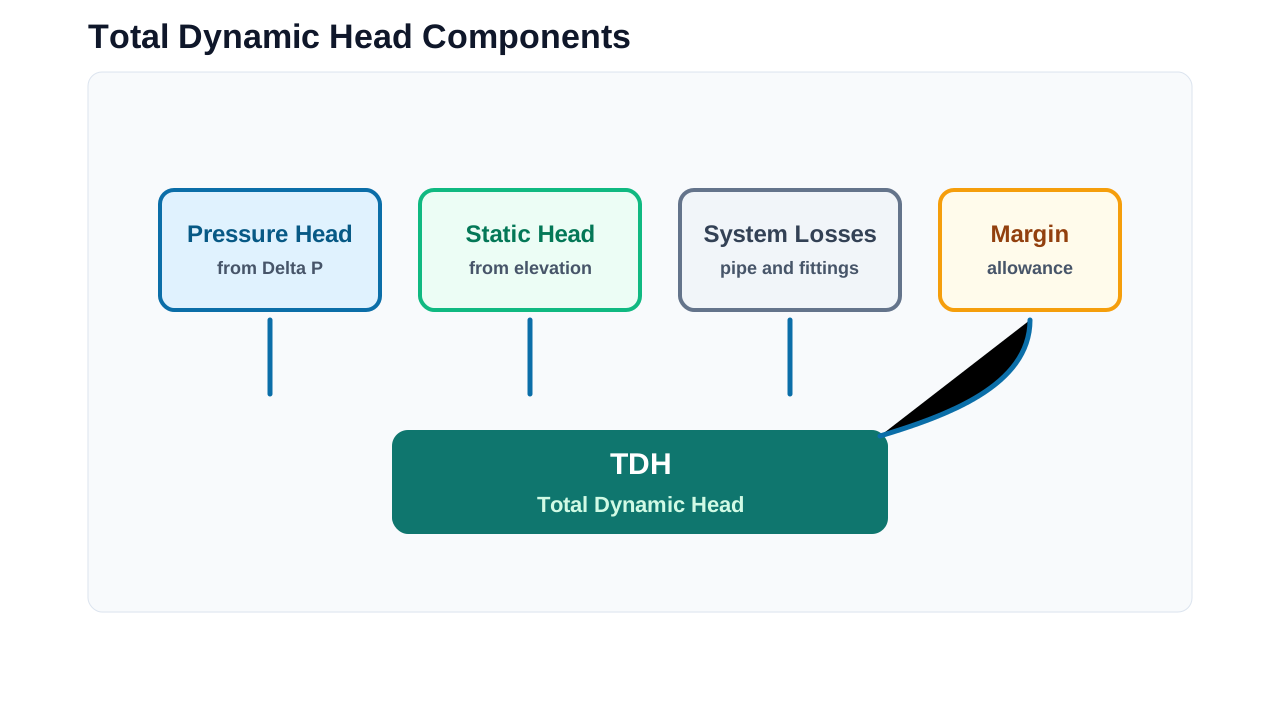
Pump head is the amount of energy a pump must add to a fluid to overcome pressure requirements, elevation changes, and resistance within the piping system. Total Dynamic Head (TDH) combines these components into the total head the pump needs to provide at the required operating condition.
This pump head calculator helps estimate the required TDH from pressure head, static head, system losses, and design margin. The result can be used as a preliminary duty point when evaluating pump performance.
Quick Summary
Engineering Visuals
How to Use the Pump Head Calculator - Calculate Total Dynamic Head (TDH)
1. Choose the calculation mode
Use component-based TDH when you know pressure head, static head, losses, and margin. Use pressure-to-head mode when you need to convert pressure difference into equivalent head.
2. Enter pressure and density values
Pressure head depends on pressure difference and fluid density. Water is often estimated near 1000 kg/m3 for preliminary calculations.
3. Add elevation and system losses
Include static elevation head and known losses from pipe friction, valves, fittings, filters, check valves, and control valves.
4. Review total dynamic head
Use the calculated TDH as a preliminary pump duty value, then check the selected pump against manufacturer performance curves.
Key Formulas
Total dynamic head formula
TDH = Pressure Head + Static Head + System Losses + Margin
This component-based formula combines the major head requirements a pump must overcome.
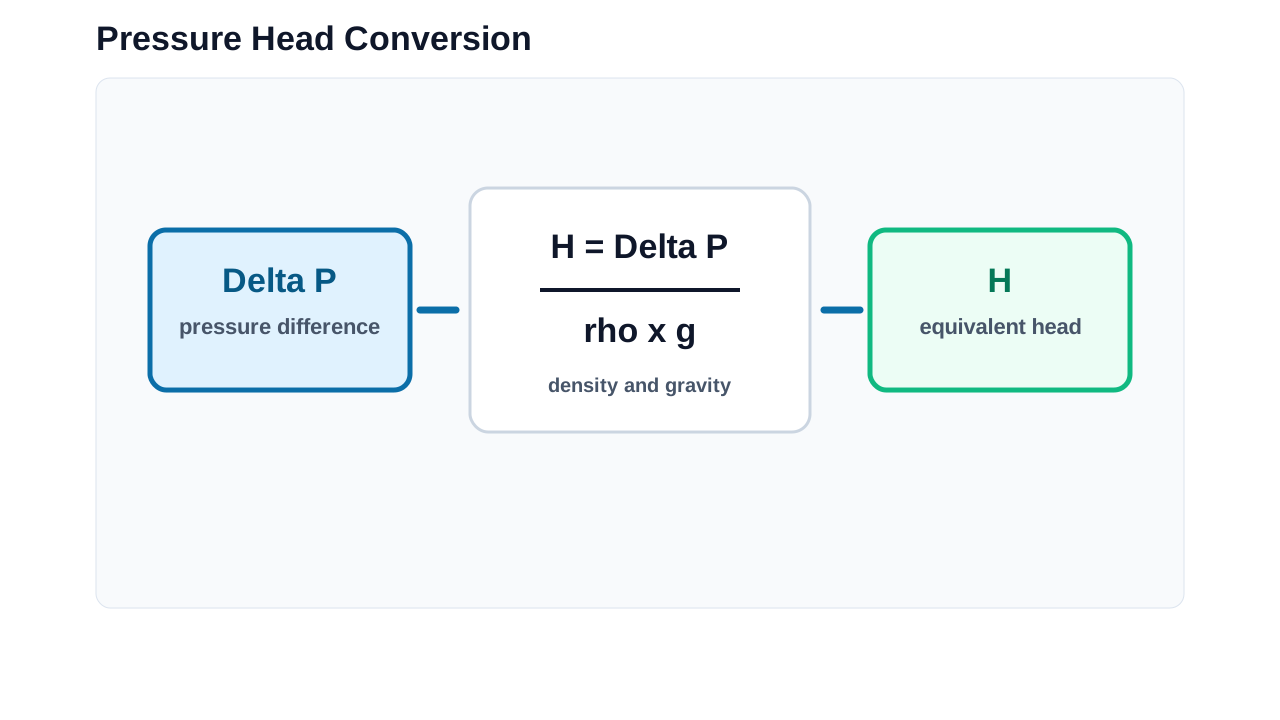
Pressure head formula
H = Delta P / (rho x g)
Pressure difference is converted into equivalent fluid head using density and gravitational acceleration.
Static head formula
Static Head = Discharge Elevation - Suction Elevation
Static head is the elevation difference between the suction reference and discharge reference.
Key Factors
Pump head vs pressure
Head and pressure are related, but not identical. Pressure depends on fluid density, while head is commonly expressed as meters or feet of fluid.
Fluid density
For a fixed pressure difference, higher fluid density gives a lower equivalent pressure head.
System losses
Pipe friction, valves, fittings, filters, check valves, and control valves can add meaningful head requirements.
Flow and head together
Pump selection needs both required flow and required head. Head alone is not enough to select a reliable pump.
Typical TDH Components
Pressure head
From pressure difference
Converts required pressure rise into equivalent fluid head using density.
Static head
From elevation
Accounts for vertical elevation difference between suction and discharge points.
System losses
From pipe and components
Covers friction and component losses through the connected piping system.
Related Guides and Tools
Tool
Pump Flow Rate Calculator
Calculate preliminary pump flow rate in GPM, LPM, and m3/h from pipe diameter and velocity.
Open tool
Tool
Pressure Drop Calculator
Estimate pipe pressure drop and head loss for fluid system design.
Open tool
Tool
Boiler Feed Pump Calculator
Estimate boiler feed pump flow, TDH, shaft power, and motor sizing for steam systems.
Open tool
Frequently Asked Questions
What is a pump head calculator?
What is TDH in pumping systems?
How do you calculate pump head?
Is pump head the same as pressure?
How does fluid density affect pump head?
Does pump head depend on flow rate?
What is the difference between static head and dynamic head?
How much pump head do I need?
Disclaimer
This pump head calculator provides preliminary engineering estimates. Final pump selection should be verified using actual system data and manufacturer performance curves.