What is a Reynolds Number Calculator?
Reynolds number is a dimensionless quantity used to characterize the flow regime of a fluid. It helps determine whether flow through a pipe is likely to be laminar, transitional, or turbulent.
This Reynolds number calculator uses fluid velocity, pipe diameter, density, and dynamic viscosity to calculate Reynolds number for internal pipe flow. It also supports kinematic viscosity when that value is available.
Quick Summary
Engineering Visuals
How to Use the Reynolds Number Calculator - Calculate Re for Pipe Flow
1. Select viscosity mode
Use dynamic viscosity if you know density and viscosity in Pa s. Use kinematic viscosity if the fluid property is already given in m2/s or cSt.
2. Enter velocity and pipe diameter
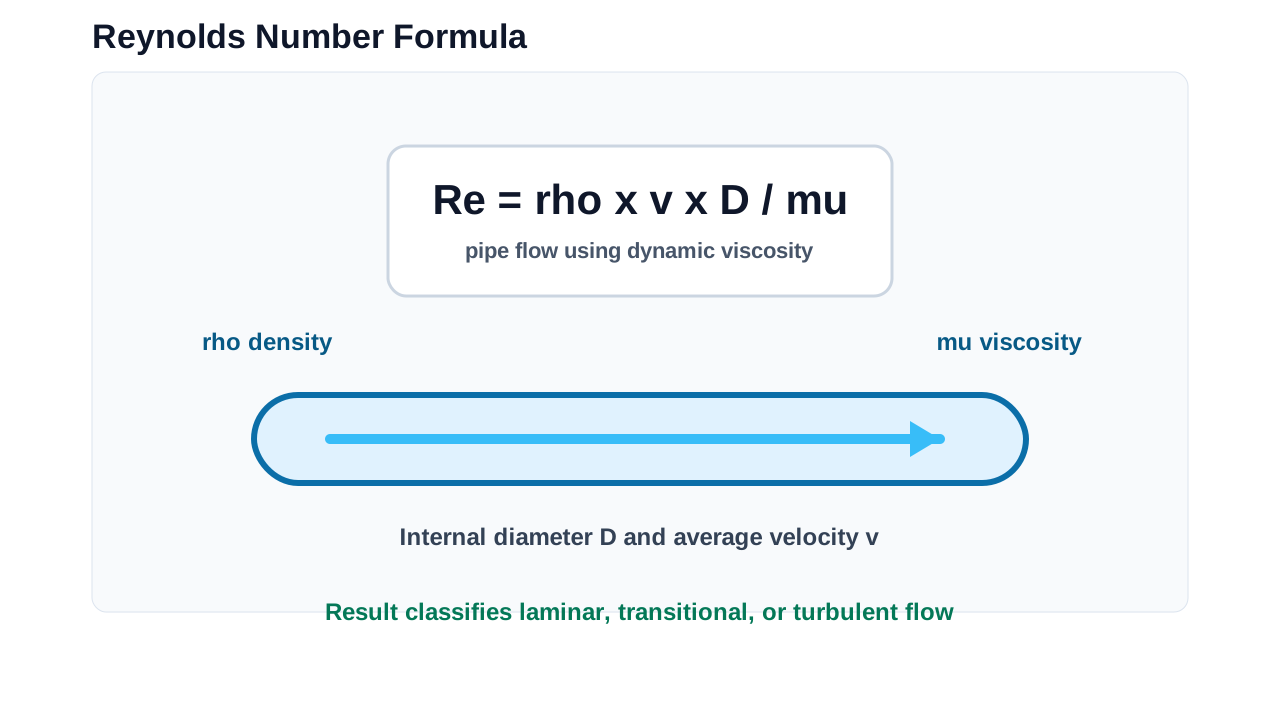
Use average fluid velocity and actual internal pipe diameter for pipe-flow Reynolds number calculations.
3. Enter viscosity data
Do not mix dynamic and kinematic viscosity formulas. The calculator changes inputs based on the selected mode.
4. Review the flow regime
Use the Reynolds number and regime label as an engineering guideline for laminar, transitional, or turbulent pipe flow.
Key Formulas
Dynamic viscosity formula
Re = rho x v x D / mu
Use this formula when density and dynamic viscosity are known.
Kinematic viscosity formula
Re = v x D / nu
Use this formula when kinematic viscosity is known directly.
Viscosity relationship
nu = mu / rho
Kinematic viscosity equals dynamic viscosity divided by fluid density.
Key Factors
Pipe internal diameter
For constant velocity, density, and viscosity, Reynolds number increases proportionally with pipe diameter.
Average velocity
Higher average velocity increases Reynolds number and can move pipe flow toward turbulent behavior.
Viscosity
Higher viscosity lowers Reynolds number because viscous effects become more important.
Engineering use
Reynolds number helps with flow regime classification, friction factor methods, pressure loss analysis, and heat-transfer correlations.
Pipe Flow Regime Guide
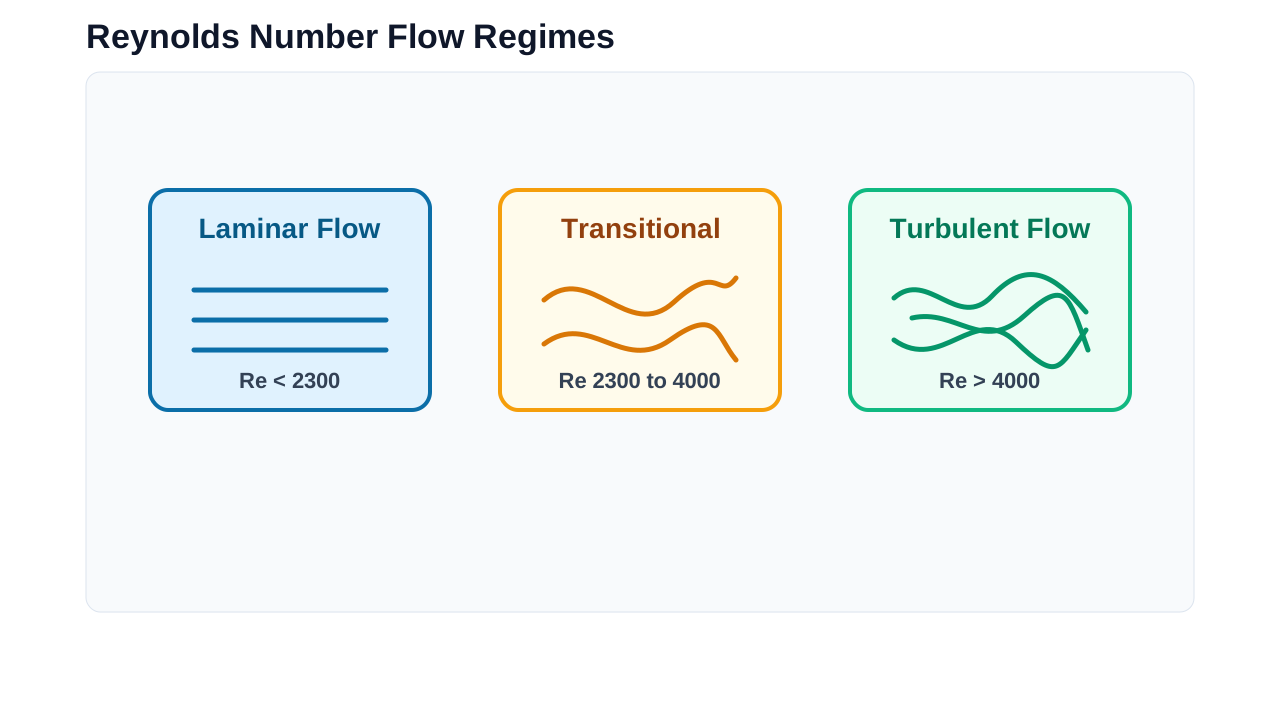
Laminar flow
Re < 2300
Flow is more orderly and viscous effects dominate.
Transitional flow
Re 2300 to 4000
Flow behavior can depend on disturbances, inlet conditions, and pipe condition.
Turbulent flow
Re > 4000
Flow has stronger mixing and inertial effects dominate.
Related Guides and Tools
Tool
Pipe Diameter Calculator
Calculate required internal pipe diameter from flow rate and target velocity.
Open tool
Tool
Pump Flow Rate Calculator
Calculate pump flow rate from volume and time or pipe diameter and velocity.
Open tool
Tool
Pressure Drop Calculator
Estimate pipe pressure drop and head loss for fluid systems.
Open tool
Frequently Asked Questions
What is Reynolds number?
What is the Reynolds number formula?
What Reynolds number indicates laminar flow?
What Reynolds number indicates turbulent flow?
What happens between 2300 and 4000?
Can Reynolds number be calculated using kinematic viscosity?
Is Reynolds number dimensionless?
Why is Reynolds number important in pipe flow?
Disclaimer
Reynolds number thresholds are commonly used engineering guidelines for circular pipe flow. Actual transition behavior can depend on disturbances, pipe condition, inlet conditions, and geometry.