BestCalcHub
BestCalcHub
Online calculators
Engineering8 min read

How to Calculate Boiler Feed Pump Power

Learn how boiler feed pump power is calculated from flow rate, pump head, fluid density, pump efficiency, shaft power, and motor selection.

By MuneebPublished 2026-08-13Updated 2026-08-13
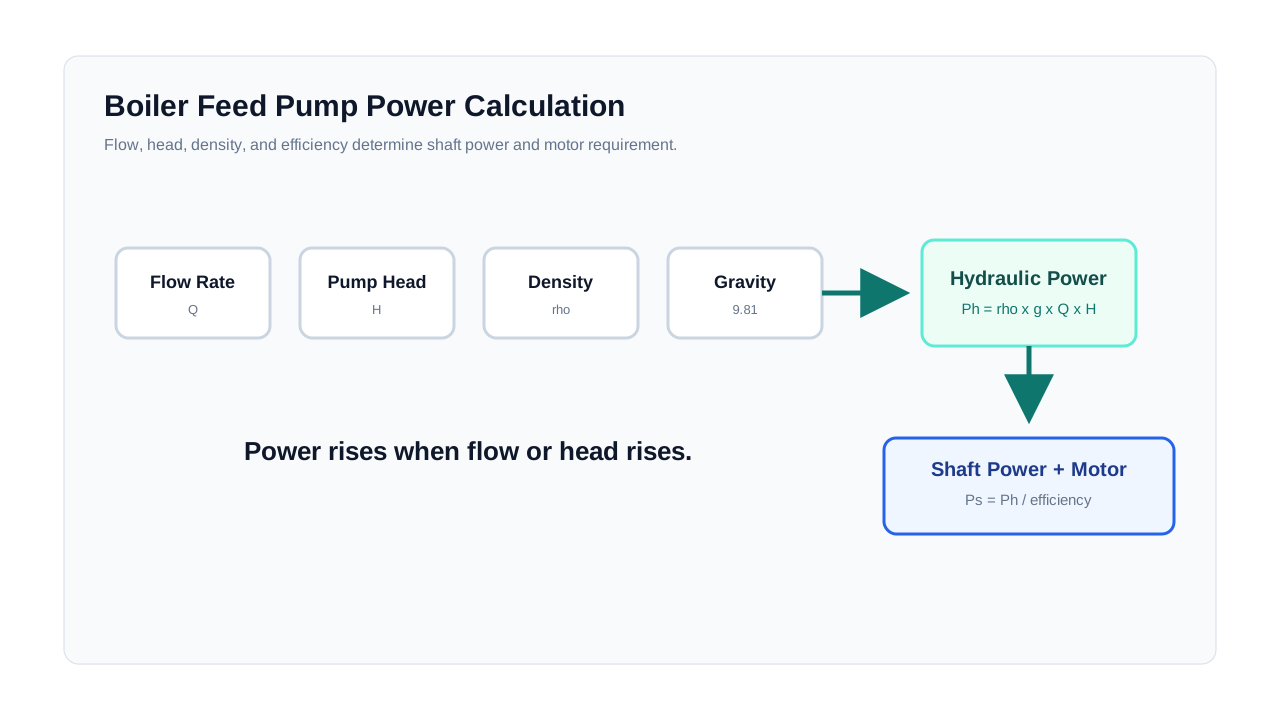
Boiler feed pump power calculation from flow head and efficiency
Boiler feed pump power starts with hydraulic duty and then accounts for pump efficiency.

Boiler feed pump power depends mainly on the amount of water the pump must move, the head it must develop, fluid density, and pump efficiency.

A pump that handles a high flow rate or operates at a high head requires more power. Pump efficiency also has a direct effect on the amount of input power required from the motor.

For a preliminary calculation, hydraulic duty can be used to estimate pump power before selecting a suitable motor and checking the manufacturer pump data.
What Is Boiler Feed Pump Power

Boiler feed pump power is the mechanical power required to move feedwater through the boiler feed system at the required flow rate and head.

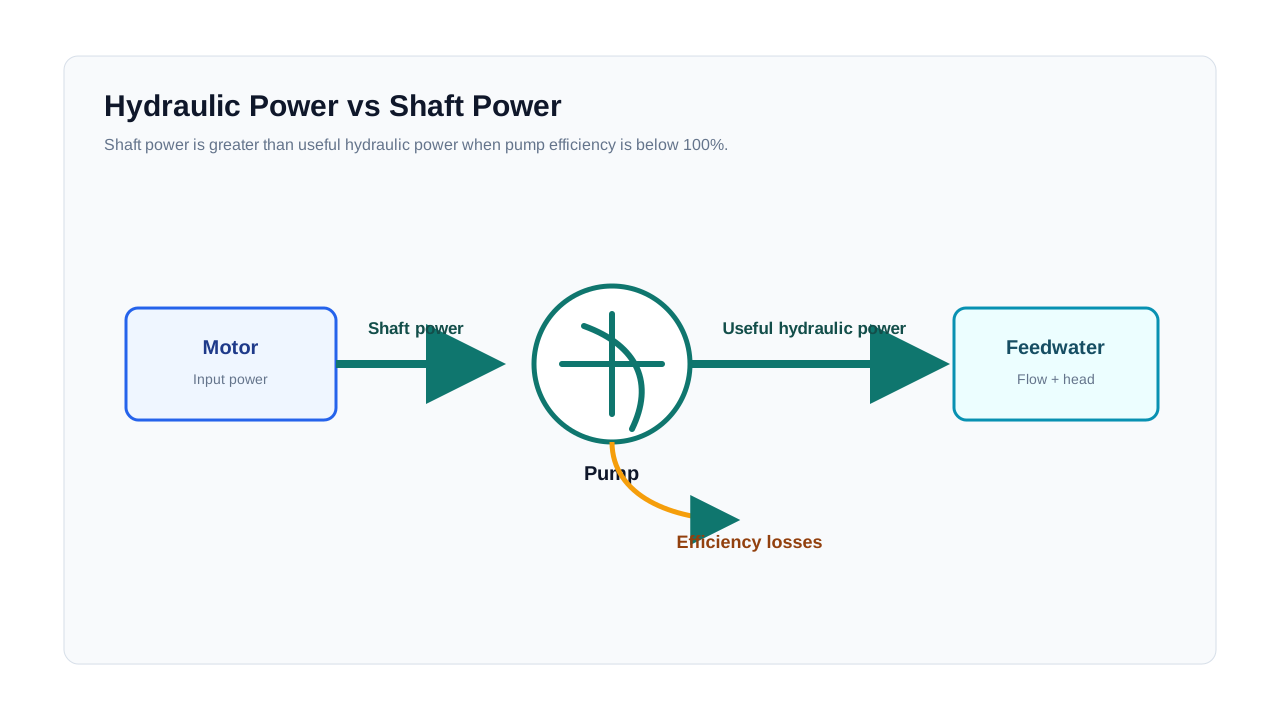
Hydraulic power is the useful energy transferred to the fluid. Pump shaft power is higher because the pump is not perfectly efficient. The motor must provide enough input power to drive the pump under expected operating conditions.

  • Hydraulic power
  • Pump shaft power
  • Motor input power

Hydraulic Power Formula

A common hydraulic power relationship uses fluid density, gravitational acceleration, volumetric flow rate, and pump head.

Ph is hydraulic power in watts, rho is fluid density in kg/m3, g is gravitational acceleration in m/s2, Q is volumetric flow rate in m3/s, and H is pump head in meters.

For water, gravitational acceleration is approximately 9.81 m/s2. This formula gives the theoretical hydraulic power delivered to the fluid before pump losses are included.

Formula

Ph = rho x g x Q x H

Why Pump Efficiency Matters

Real pumps lose some energy through hydraulic, mechanical, and other losses. Pump efficiency can be represented as hydraulic power divided by shaft power.

Efficiency must be entered as a decimal. For example, 75% efficiency should be entered as eta = 0.75, not 75.

The lower the efficiency, the greater the shaft power required for the same flow and head.

Formula

Ps = (rho x g x Q x H) / eta

Step 1 Determine the Required Flow Rate

Before calculating pump power, establish the required feedwater flow rate. Flow is one of the most important variables because hydraulic power is directly proportional to flow.

The feedwater flow should be based on actual boiler duty and operating requirements rather than simply using the pump maximum rated capacity.

For a broader explanation of the complete sizing process, see How to Size a Boiler Feed Pump.

Complete sizing guide - How to Size a Boiler Feed Pump

Step 2 Determine the Required Pump Head

The second major input is pump head. Head can include pressure head, static head, pipe losses, valve and fitting losses, and other system resistance.

Because power is directly proportional to head, increasing the required head increases the pump power requirement.

For the detailed head calculation process, see How to Calculate Boiler Feed Pump Head.

Detailed head guide - How to Calculate Boiler Feed Pump Head

Step 3 Convert Flow Rate to the Correct Unit

The power equation requires flow rate in m3/s when using SI units. Values such as m3/h, L/min, or GPM need to be converted before using the equation.

Using the wrong flow unit is one of the easiest ways to produce a completely incorrect power result.

Formula

25 m3/h / 3,600 = 0.00694 m3/s

Step 4 Use the Correct Fluid Density

Fluid density is another input in the power equation. For water, a preliminary calculation may use approximately 1,000 kg/m3.

Actual density changes with temperature and pressure. Boiler feedwater can be significantly hotter than ordinary room-temperature water, so actual operating conditions should be considered for a more accurate engineering calculation.

Step 5 Calculate Hydraulic Power

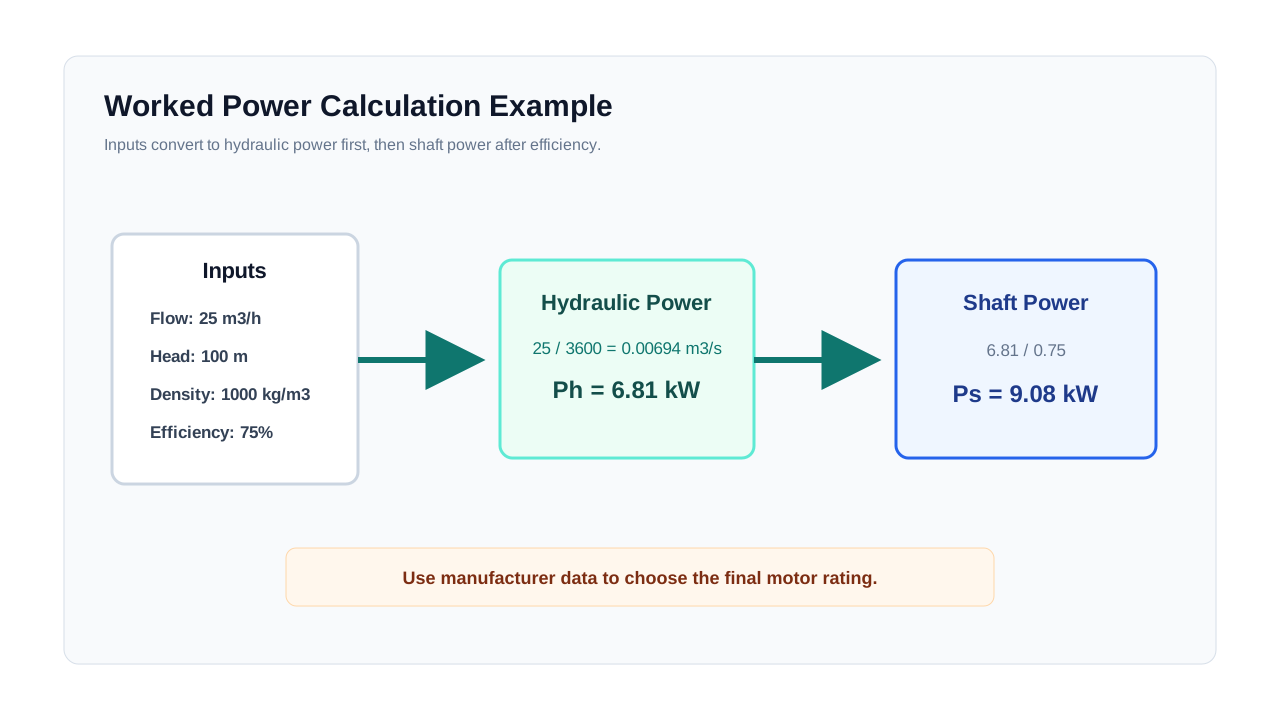
Suppose a boiler feed system requires 25 m3/h flow, 100 m head, and water density of 1,000 kg/m3.

First convert the flow to 0.00694 m3/s. Substituting into the hydraulic power formula gives approximately 6.81 kW.

This represents the theoretical power transferred to the water before pump efficiency is included.

Formula

Ph = 1,000 x 9.81 x 0.00694 x 100 = 6.81 kW

Step 6 Calculate Shaft Power

Difference between hydraulic power and boiler feed pump shaft power
Shaft power is higher than hydraulic power because real pumps have efficiency losses.

If pump efficiency is 75%, or eta = 0.75, divide hydraulic power by efficiency to estimate shaft power.

The estimated shaft power requirement is approximately 9.1 kW. The actual requirement should be checked against manufacturer performance data at the intended duty point.

Formula

Ps = Ph / eta = 6.81 / 0.75 = 9.08 kW

Worked Boiler Feed Pump Power Example

Worked boiler feed pump power calculation example
Example sequence from flow conversion to hydraulic power and shaft power.

For required flow of 25 m3/h, total dynamic head of 100 m, water density of 1,000 kg/m3, and pump efficiency of 75%, the converted flow is 0.00694 m3/s.

Hydraulic power is approximately 6.81 kW. Shaft power is approximately 9.08 kW after dividing by 0.75 efficiency.

A suitable motor rating would then be selected based on manufacturer recommendations and available standard motor sizes.

Selecting the Motor Size

Once shaft power has been estimated, the next step is selecting an appropriate motor. The motor should be capable of providing the required mechanical power under expected operating conditions.

In practice, the selected motor may be chosen at a suitable standard rating above the calculated requirement. The exact selection depends on pump manufacturer recommendations, starting requirements, expected load variation, service conditions, and project standards.

Using hydraulic power directly as the motor rating would ignore pump losses and can underestimate the actual mechanical requirement.

Formula

Motor Rating >= Required Shaft Power

Common Mistakes

  • Using flow in m3/h without conversion
  • Using 75 instead of 0.75 for efficiency
  • Using hydraulic power as motor power
  • Ignoring actual operating head
  • Assuming pump efficiency is constant
  • Selecting the largest motor automatically

Related Boiler Feed Pump Guides