BestCalcHub
BestCalcHub
Online calculators
Engineering7 min read

How to Size a Boiler Feed Pump Flow, Head, Power, and Motor Selection

Learn how to size a boiler feed pump using feedwater flow, total dynamic head, pump efficiency, shaft power, motor rating, NPSH, and pump curve checks.

By MuneebPublished 2026-08-13Updated 2026-08-13
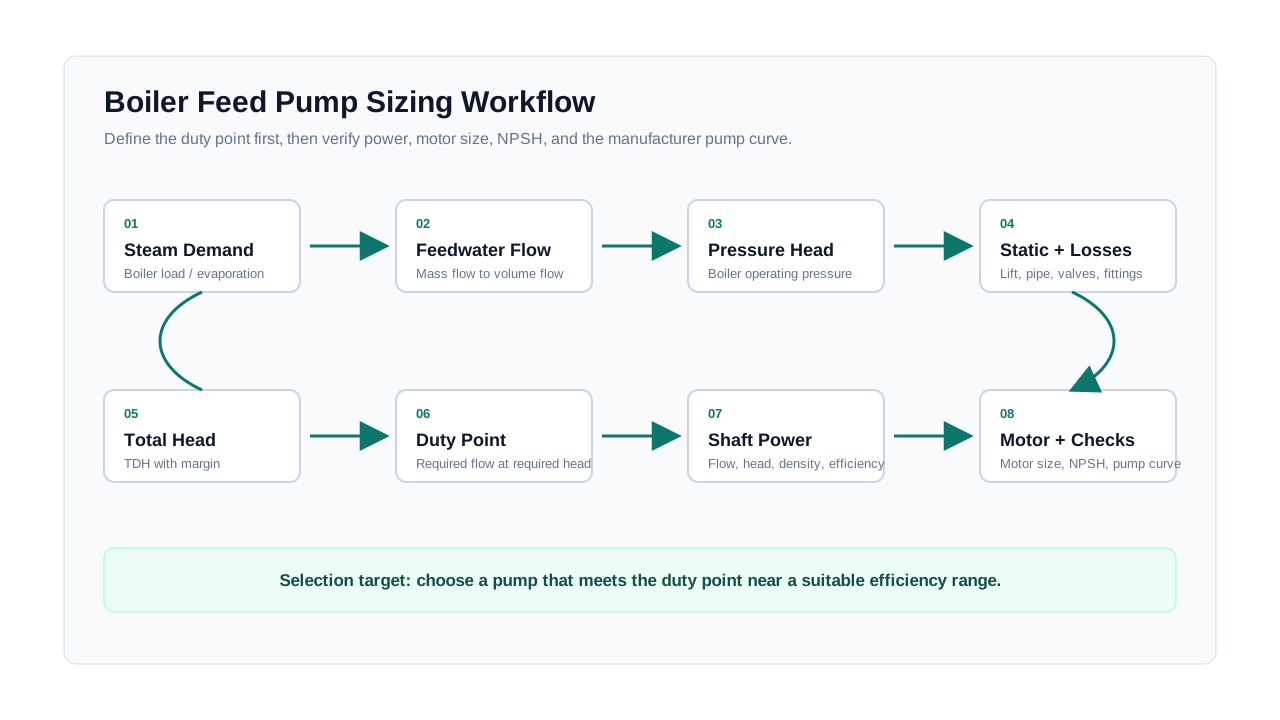
Boiler feed pump sizing workflow diagram
A quick visual summary of the boiler feed pump sizing process.

Selecting the right boiler feed pump starts with understanding the complete pump duty point rather than looking at flow rate alone.

A boiler feed pump has to deliver the required feedwater flow against boiler pressure and system resistance. If the pump is undersized, it may fail to provide the required feedwater supply. If it is oversized, it may operate away from its intended range, increasing energy consumption and equipment wear.

A practical sizing process considers required feedwater flow, total dynamic head, pump efficiency, shaft power, motor size, and operating conditions.
What Is Boiler Feed Pump Sizing?

Boiler feed pump sizing means determining the operating conditions the pump must satisfy before selecting a suitable pump model.

The two most important hydraulic requirements are required flow rate and required pump head. Once these values are established, pump efficiency and shaft power can be evaluated to determine a suitable motor rating.

The final pump selection should then be checked against the manufacturer pump curve and the actual system duty point.

  • Required flow rate
  • Required pump head
  • Pump efficiency
  • Shaft power
  • Motor rating

Step 1 Determine the Required Feedwater Flow

The first step is determining how much feedwater the boiler system requires. Boiler steam demand provides the starting point because the feed pump must continuously supply the water needed by the boiler.

For water, density is commonly close to 1,000 kg/m3 under ordinary conditions, although the actual value changes with temperature and pressure.

Sizing the pump exactly to the minimum steam demand may leave little operating margin. Actual feed pump duty may also need to account for blowdown, recirculation, operating margin, control strategy, and variation in boiler load.

Formula

Volumetric Flow = Mass Flow / Fluid Density

Step 2 Determine the Required Pump Head

Once the required flow has been established, the next major requirement is total dynamic head, or TDH.

Higher boiler pressure generally means a greater pressure-head requirement for the feed pump. This is why a pump cannot be selected from its flow rating alone.

Other contributors can include elevation difference, pipe friction, valves, fittings, control valves, and other system restrictions.

Formula

TDH = Pressure Head + Static Head + Losses + Margin

Detailed head guide - How to Calculate Boiler Feed Pump Head

Step 3 Account for System Losses

The pump must overcome more than boiler pressure. The feedwater system itself introduces resistance through straight pipe runs, elbows, valves, filters, check valves, control valves, and other fittings.

Pipe diameter and system layout also affect the amount of resistance. At a given flow, changes in pipe size can change fluid velocity and friction losses.

Step 4 Establish the Pump Duty Point

Boiler feed pump sizing workflow from flow and head to motor selection
A boiler feed pump sizing workflow from steam demand to pump curve review.

The required flow and required head together define the basic pump duty point. For example, 20 m3/h at 80 m head is a more useful selection target than maximum flow alone.

A pump available flow changes as head changes, so the required operating point should be checked against the manufacturer performance curve.

Step 5 Check the Pump Performance Curve

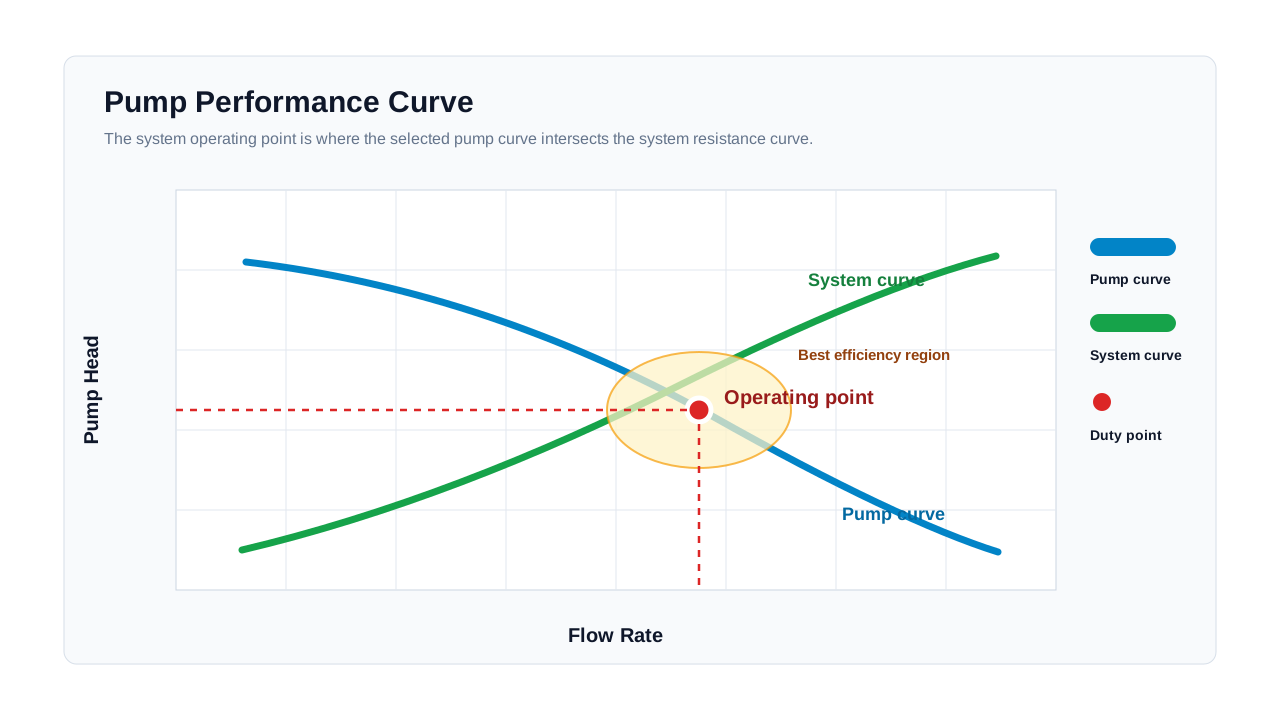
Boiler feed pump performance curve showing pump operating point
The operating point is where the pump curve and system resistance curve intersect.

A manufacturer pump curve shows how the pump performs at different combinations of flow and head. Important information may include flow rate, pump head, pump efficiency, shaft power, and NPSH required.

A pump may technically meet the required flow but still be a poor selection if its operating point is far from its efficient operating range.

Step 6 Estimate Pump Power

After the required flow and head are established, the hydraulic power requirement can be estimated. Q is volumetric flow rate in m3/s, H is pump head in m, rho is fluid density in kg/m3, and efficiency is expressed as a decimal.

Increasing the required flow increases power demand. Increasing the required head also increases power demand.

Formula

Power = (Q x H x rho x 9.81) / Efficiency

Detailed power guide - How to Calculate Boiler Feed Pump Power

Step 7 Select a Suitable Motor Size

Calculated shaft power provides the basis for selecting the motor. A practical motor selection normally includes some allowance above the calculated requirement to account for operating variation and uncertainty.

Motor selection should not be based only on boiler steam capacity. The hydraulic duty point, pump efficiency, operating range, and calculated power all matter.

Formula

Motor Rating = Calculated Power + Operating Margin

Step 8 Consider Pump Efficiency and Operating Conditions

Pump efficiency affects the input power required to produce the desired hydraulic output. Two pumps can have similar flow and head ratings but require different input power because their efficiencies are different.

The objective is not to select the largest available pump. It is to select a pump that matches the actual system requirements.

Step 9 Check NPSH

Boiler feedwater can be relatively hot, making suction conditions particularly important. NPSH, or Net Positive Suction Head, helps assess whether sufficient pressure is available at the pump suction to reduce cavitation risk.

For final selection, compare NPSH Available with NPSH Required under the actual operating conditions.

  • Feedwater temperature
  • Suction pressure
  • Suction-side losses
  • Elevation
  • Feedwater tank conditions
  • Pump location
Detailed NPSH guide - NPSH in Boiler Feed Pump Sizing

Worked Boiler Feed Pump Sizing Example

Consider a simplified boiler system with required feedwater flow of 25 m3/h, required total head of 100 m, water density of about 1,000 kg/m3, and pump efficiency of 75%.

Confirm the required flow, confirm total dynamic head, convert the flow to m3/s, evaluate hydraulic power, review suitable pump curves, compare efficiency, check NPSH, and then select the motor based on calculated power and manufacturer recommendations.

Common Mistakes

  • Sizing from flow alone
  • Ignoring system losses
  • Selecting an oversized pump
  • Ignoring pump efficiency
  • Ignoring NPSH
  • Treating a preliminary calculation as final selection

Related Boiler Feed Pump Guides